
What happens when demand keeps rising for Not for Profit organisations, but funding doesn’t? Our 2026 NFP sector report reveals the reality facing organisations across Aotearoa including growing community need, governance pressures, and increasing cyber risks. This year’s research provides insights about how these challenges can be addressed to ensure the sector can continue supporting our communities. We’ve invested in this research for over two decades to shine a perpetual light on what it’s like to operate a charitable organisation in the face of ongoing uncertainty. It reinforces our deep conviction the work NFPs do is critical to New Zealand and we hope it sparks meaningful conversations about the sector.
Filter insights by:
Popular topics
Featured insights

Murray Brewer says the Election 2026 tax debate is shaping up to be one of the most significant in decades. From capital gains and wealth taxes to land taxes, KiwiSaver reforms and compliance simplification, the competing visions from National, Labour, the Greens, Te Pāti Māori and TOP reveal starkly different futures. But Murray says the real story isn't just policy, it's coalition negotiations. Read his article to discover which tax proposals are most likely to survive and what they could mean for businesses, investors and households.


Earlier this year, Inland Revenue released a consultation paper about the tax treatment of software expenditure. If your business continues to invest in SaaS and other cloud platforms, potential reforms aimed at simplifying the rules and reducing compliance costs could be on the way. Tax Partner, Sam O’Connor explains why the treatment of software is under review and the practical steps your business can take now to stay ahead of any changes that might be on the horizon.

Latest articles
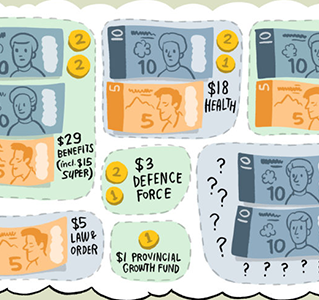
Budget 2019: Unless we can find some way of taxing wealth as well as incomes, New Zealand is headed for an intergenerational economic meltdown, writes Grant Thornton tax partner Murray Brewer.

Budget 2019: Should the collection of taxes be the point at which we talk about fairness, or should fairness be part of a completely different conversation, asks Grant Thornton tax partner Oksana Simonoff.

Now that we know what the Wellbeing Budget is, the question is how we can create the right political and social environment to support it, says Grant Thornton’s Barry Baker.


The requirements of Public Benefit Entities International Public Sector Accounting Standards (PBE IPSAS) for Not-for-Profit reporting entities are continuing to change. Navigating the Changes to PBE IPSAS for Not-for-Profits gives chief financial officers, and audit and risk committee members a high-level awareness of these recent changes to PBE IPSAS. It covers both brand new standards, and changes that have been made to existing ones.

To achieve a successful sale of a business and extract its maximum value, it’s critical that the planning process begins well in advance.


Gender diversity in business leadership is a no-lose proposition, yet progress is still slow. Grant Thornton International has been surveying thousands of businesses annually since 2004 about the levels of gender diversity in leadership roles globally.


Globally, the percentage of businesses with at least one woman in senior management has risen to 87%, an increase of 12% in the last year, according to our latest Women in Business research from Grant Thornton International.

Impact in action is the first of two reports, which features the findings of our research with over 30 leading global charities. We explore what impact means to different charities, the challenges they face in measuring it, and the innovations developed to overcome these challenges.

Whether you want to communicate your organisation’s purpose and objectives, or to attract new sources of funding, your annual financial statements are a powerful tool for telling your story, but all too often the opportunity for making an impact is lost.

The slow pace of change in gender diversity at a leadership level indicates there needs to be a shift in NZ’s business culture.

Expatriates taking up employment in New Zealand will be subject to our comprehensive tax rules and work permit requirements. Liability to tax will be principally determined by the employee’s tax residence status and the source of the relevant income.

What might the 2018 Budget deliver on regional economic development, and how will it intersect with our largest city? In the first piece in a series analysing Budget 2018, Grant Thornton’s Murray Brewer casts his eye over the options and opportunities.

In this year’s report Women in Business: Whilst businesses globally have taken one step forward and one step back on women in leadership, New Zealand has taken two firm steps back.

The New Zealand Relationship Property Survey 2017 is based on the views of nearly 400 family law practitioners. It is one of the most comprehensive studies of its kind


There are a growing number of mature medical practice owners who should be thinking about how they will exit their businesses. Bringing in the next generation to take over a legacy often presents challenges that threaten a successful transition.


There is no doubt International Accounting Standards have contributed significantly to the globalisation of the business world, crucially providing reliable and comparable information to investors for decision-making purposes.