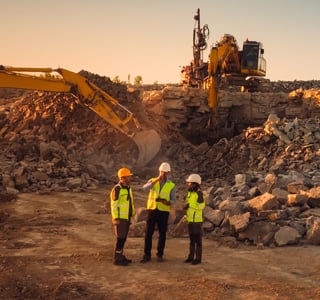
The civil construction industry has been hammered over the past two years, and although there are good times ahead, we’re not quite sure exactly when they’ll arrive.
Contents
That was the overall message from the recent Civil Contractors Conference in Tauranga, where Prime Minister Christopher Luxon announced $6 billion in infrastructure spending projects would start by Christmas. Welcome news for the industry and it’s estimated this will create at least 10,000 new jobs.
Yet civil construction businesses remain caught in a boom-and-bust cycle that undermines successful infrastructure construction and maintenance. New Zealand is in the top 10% of developed nations for infrastructure spending, but in the bottom 10% for efficiency, according to the OECD; during 2010 - 2019 NZ spent more per capita on infrastructure than any other country. We’re not getting value for money from our public capital investment, and in the long run that means that New Zealanders are missing out.
The rollercoaster of ups and downs in the sector is one cause of this inefficiency. In the good times, money is often spent as quickly as it is earnt as businesses scramble to keep up with a massive pipeline of work. Assets like machinery and vehicles are bought at a premium; wages rise; new businesses sprout. Then a downturn arrives. Workers are laid off and some move to Australia permanently, taking with them their institutional knowledge and skillset; assets are sold for a fraction of what they would have been worth in better times; liquidations soar. There are no winners when this pattern keeps repeating.
Longer-term planning can help create a reliable pipeline
How can civil construction businesses escape this trap? Changes need to happen at government, regional and individual business levels.
As a nation, we need long-term infrastructure planning. Our various governments have a habit of commissioning and then cancelling multi-billion-dollar projects – such as the Auckland Light Rail
Project and Three Waters. Every time this happens it’s a disaster for the industry, directly impacting thousands of jobs and hundreds of businesses.
If we could develop the 30-year National Infrastructure Plan the New Zealand Infrastructure Commission is driving, it would help smooth out the dramatic highs and lows. A long-term plan would create a more reliable pipeline for the sector and help boost infrastructure efficiency and performance.
How can you build resilience in the good times to survive the bad times?
When it comes to individual businesses in the civil sector, a clear strategy and making informed decision using reliable information is the key to survival in the tough times, and profitability in the good times.
In the last two years we have seen how quickly revenue can fall by 10–20% overnight due to factors well beyond owners’ control. The businesses that navigate these challenges the best act fast and have reliable information and a clear strategy. With the right reporting and forecasting in place, you can make more informed decisions about your project pipelines, workforce and capital allocation.
This includes scenario testing to model best and worst-case scenarios. Early engagement with banks and advisors gives you options and flexibility, as well as different perspectives, rather than waiting until the pressure builds and you’re left with very few options.
We know that every spending decision is carefully considered when times are tough. But during the boom times, that level of consideration sometimes goes out the window. When a high-value job comes in, a digger is purchased through cashflow without running the numbers on whether it might be better to lease it or fund it through debt facilities. If that project is suddenly cancelled, then you’re stuck with an underutilised piece of equipment that is worth a fraction of what it cost, often at a time when demand has fallen away.
Fingers crossed we’ll see a civil construction upturn in 2026 which will flow into a strong pipeline of work for the industry into 2027 and beyond. You can use the good times to build up your resilience for the next downturn. You’ll need to be deliberate and thoughtful about where you invest, whether this in people, technology or CAPEX which will help set you apart from your competitors.
6 considerations to set you up for sustainable growth
If you operate a civil construction business and you’ve survived this far, you’re obviously doing something right. What lessons can you take from the past two years that will set you up to thrive in the next upturn?
Here are six vital considerations that can help your business grow sustainably, so it makes the most of the growth phase of the economic cycle and survive a recession:
Do you have a clear strategy? Be focused and clear about the type of work your business does well. A clear strategy aligns your team and builds a reputation for the type of jobs you want to win.
Are most of your jobs profitable? There are always some unprofitable jobs, and sometimes you might take a zero-profit job for a strategic reason. But continuously winning jobs that make you no money is not going to build a resilient business. Understanding your breakeven point on jobs (including overhead allocation) is crucial.
Is your reporting helping you make decisions? Do you have solid lead and lag indicators that tell you exactly what direction your business is heading – or at a very minimum monthly or quarterly reporting? Good data enables better forecasting, faster responses, and smarter strategic choices.
Are you borrowing for the right reasons? Be deliberate about what you’re trying to achieve. Debt should be furthering a clear plan for the business and repayments need to be within limits.
Are you putting away resources for the next rainy day? It worked for our grandparents, and it remains true today. In the good times it’s about building resilience and getting advice to ensure you are putting cash reserves to the best use, balancing the need to have cash on hand for a rainy day, having the cash to grow with the risk of having too much cash in the business.
Are you investing in capability and capacity? Having a workforce that is skilled, adaptable, and supported by the right systems and technology creates a well-oiled machine.
There are no simple solutions, but every level of the sector can play a part in getting us out of this pattern of boom and bust. Running harder doesn’t work. We need to work smarter, focus on efficiency, and take a long-term view on success.
Better infrastructure is a win for all of us: it makes the whole economy more efficient and attracts talented people to stay and move here. Let’s build a more resilient and sustainable industry, and a better New Zealand for the future.
Sign up to receive insights
Get articles and updates relevant to your business and industry delivered directly to your inbox.
For civil construction businesses, margins and machinery only tell part of the story about their value. In this article, Louisa Meredith and Matt Thomson cover the operational, governance and financial factors that can make your business more resilient, more profitable and ultimately more attractive to acquirers long before any sale is on the table:
If the margins in your construction business are already razor thin, rising fuel and material costs could push profitability even closer to the edge. Matt Hannah explains why accurate job costing, real-time financial visibility, and stronger systems have never been more important for construction businesses. He covers where risk is building across the sector, how poor costing can quietly erode profits, and the practical steps you can take to protect your cashflow, improve decision making, and strengthen your business for the years ahead.
Owning a mortgage-free home has traditionally been the optimal situation for the Kiwi retiree. But for many people, that’s not an option as an increasing number of New Zealanders are approaching retirement as renters. Dan Lowe, property and construction services leader at Grant Thornton New Zealand looks at how build to rent developments could support our elderly population.